Temper Reference
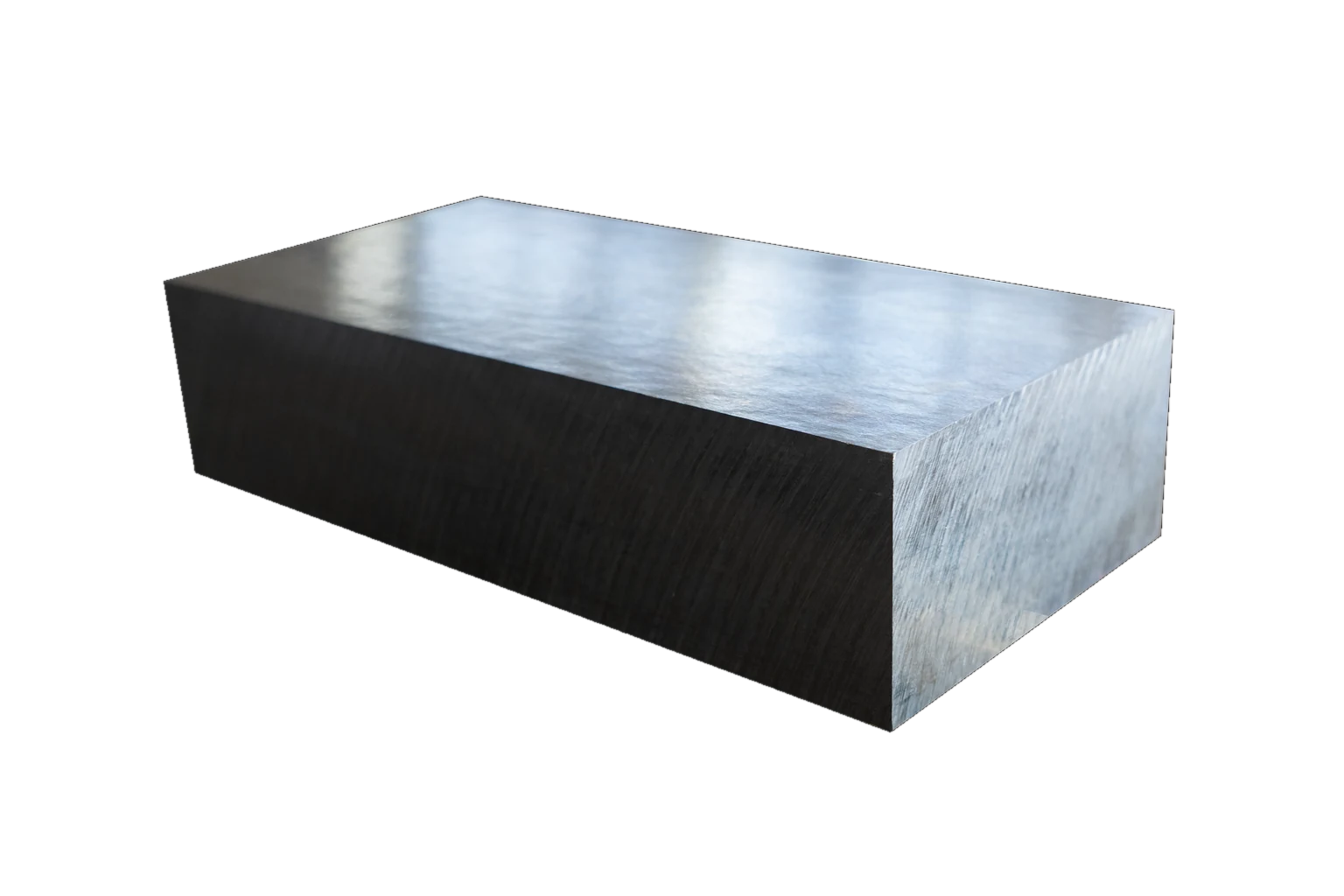
The stress-relieved plate temper for 6061. Solution heat treated, mechanically stretched to remove residual stress, then artificially aged to T6 property levels. The correct specification for any 6061 plate that will be machined.
What is 6061-T651?
6061-T651 is 6061 aluminum plate that has been solution heat treated, stress-relief stretched 1.5 to 3 percent of its length, and artificially aged. The stretching step is the defining process difference between T651 and plain T6 and is the reason T651 is specified for any plate that will see significant machining. NOX METALS stocks 6061-T651 plate from 0.25 inch through 10 inches thick, certified to AMS-QQ-A-250/11, with mill certifications, heat numbers, and lot traceability on every order.
STEP 1
Plate is heated to approximately 985°F (530°C) to dissolve the magnesium silicide precipitates into solid solution, then rapidly quenched in water to lock the solute atoms in place.
STEP 2
The quenched plate is mechanically stretched 1.5 to 3 percent of its original length. This plastic deformation redistributes residual stresses left from the non-uniform quench, leaving the plate effectively stress-free for machining.
STEP 3
The stretched plate is held at approximately 350°F (175°C) for 8 to 10 hours, allowing fine Mg2Si precipitates to form and strengthen the matrix to the T6 property level.
The order matters. Aging before stretching would lock in the residual stress. Stretching before solution treatment would have no meaningful effect. The sequence — quench, stretch, age — is what produces a stress-relieved plate at peak strength. All steps happen at the mill before the plate ships.
Values are specification minimums unless noted as typical. Consult the applicable AMS or ASTM specification for complete property data including transverse direction and thickness-dependent minimums.
NOX METALS mill certifications list all applicable specifications per heat and lot, plus heat treatment records, chemistry, and mechanical test values. DFARS, domestic-origin, and any-origin material is available.
Specify T651 for any 6061 plate that will be machined, milled, drilled, or otherwise have material removed. The stress relief from stretching is what keeps the finished part dimensionally stable. A pocket milled into unrelieved T6 plate can warp several thousandths over a long dimension as stress is unbalanced; the same pocket in T651 holds flat.
Specify T651 for aerospace structural plate, machined tooling and fixtures, CNC mold bases, jig plate, and any precision machined part. Specify T651 when the drawing calls out AMS-QQ-A-250/11, AMS 4027, or any specification that references stress-relieved plate.
For simple structural cut-to-length applications where no meaningful machining is involved — a bracket sheared and drilled, a plate bolted into an assembly — T6 without stretching is often acceptable and sometimes cheaper. Check the drawing call-out before substituting.
T651 means the plate was solution heat treated, then mechanically stress-relieved by stretching between 1.5 and 3 percent of its length, and finally artificially aged to the T6 property level. The stretching step is what distinguishes T651 from T6. It plastically deforms the plate slightly, redistributing the residual stresses left over from quenching so the material is effectively stress-free for subsequent machining.
The chemistry and final mechanical properties are nearly identical. The difference is residual stress. T6 skips the stretching step; T651 includes it. For plate that will be machined, T651 is required because residual stress in T6 plate causes parts to warp significantly during material removal. For plate that will not be machined (simple cut-to-length structural use), T6 is acceptable.
The primary aerospace plate specification is AMS-QQ-A-250/11. AMS 4027 covers 6061 plate. ASTM B209 is the general wrought aluminum plate specification and also applies. Mill certifications from NOX METALS list all applicable specifications per heat and lot, along with the AMS 2770 heat treatment spec.
NOX METALS stocks 6061-T651 plate from 0.25 inch through 10 inches thick in standard widths of 48 inches and 60 inches, and standard lengths of 96 inches and 144 inches. Rectangular cuts to your exact dimensions are available from stock with bandsaw cutting at 0.08 inch kerf.
Yes, substantially. 6061 has relatively low quench rate sensitivity compared to 7xxx-series alloys. Minimum tensile strength of 42,000 psi holds across the full thickness range from 0.25 inch up to 4 inches thick without meaningful degradation. Above 4 inches, some mills drop the minimum by a few thousand psi; NOX METALS supplies mill certifications showing actual values per heat.
No. 6061-T651 machines cleanly with standard carbide tooling at speeds and feeds similar to free-machining aluminum. The stress-relief from stretching is the reason T651 holds dimensional stability through heavy material removal. Sharp tools, continuous chip breaking, and moderate flood coolant produce excellent surface finishes.
6061 Aluminum Plate
Full alloy overview, all tempers
6061 vs 7075
Strength and weldability tradeoffs
6061 vs 7050
General vs aerospace thick-section
Get a Quote
Stocked in Detroit, MI from 0.25 inch through 10 inches thick. DFARS and domestic-origin available. Mill certifications to AMS-QQ-A-250/11 included. Quotes in under 60 seconds.