Temper Reference

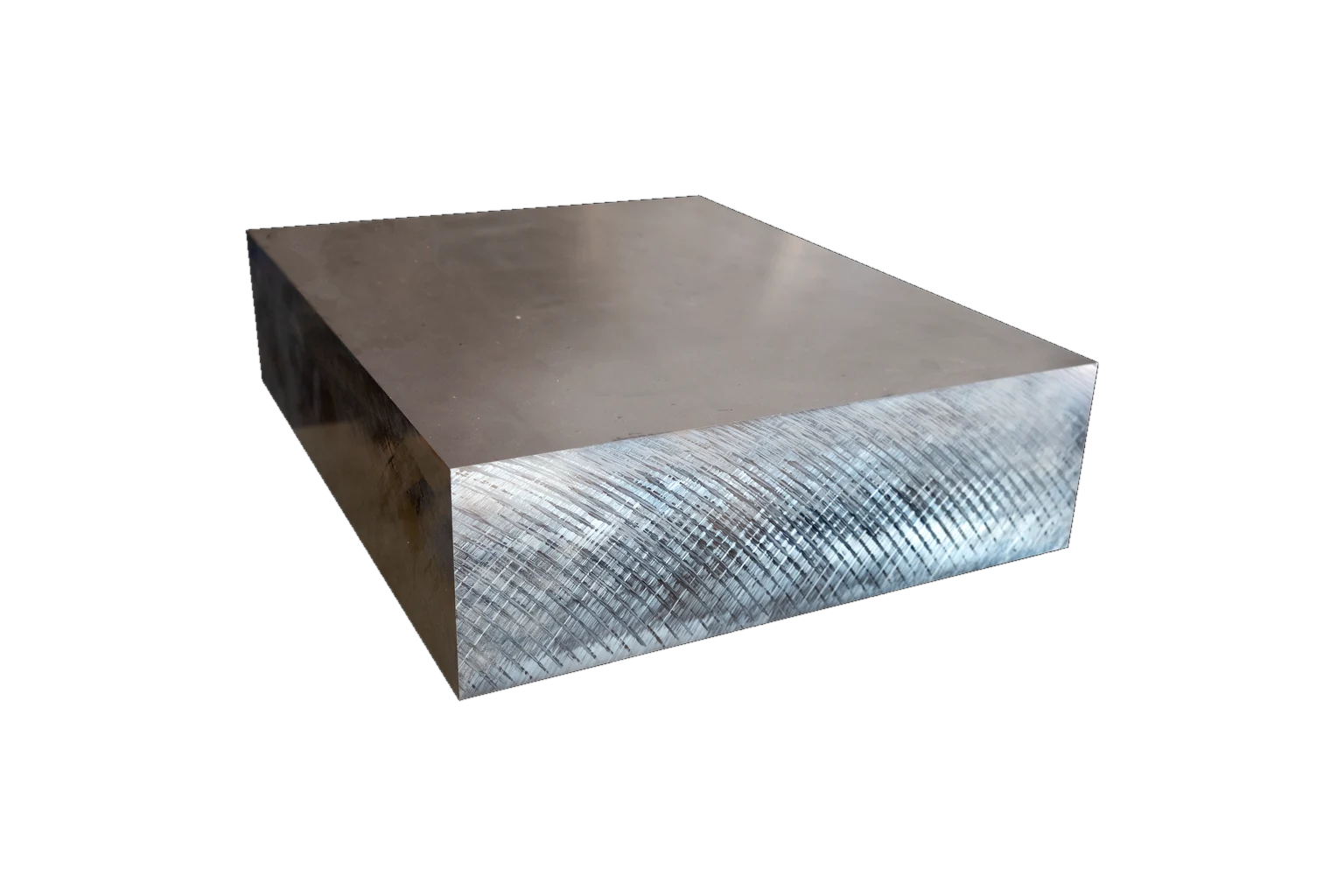
7075-T7351 Aluminum Plate

The overaged 7075 plate temper. Solution heat treated, stress-relief stretched, then two-step overaged past peak strength to produce substantially improved stress corrosion cracking resistance. The right choice for 7075 parts exposed to humid or corrosive service.

What is 7075-T7351?

7075-T7351 is 7075 aluminum plate overaged past peak strength to gain stress corrosion cracking resistance. The temper is specified when the finished part will experience sustained tensile stress in a corrosive environment, where T651's higher strength would come with unacceptable SCC risk. NOX METALS stocks 7075-T7351 plate from 0.25 inch through 6 inches thick, certified to AMS-QQ-A-250/12 and AMS 4123, with mill certifications on every order.

How 7075-T7351 Is Produced

STEP 1

Solution Heat Treatment

Plate is heated to approximately 900°F (482°C) to dissolve MgZn2 and other precipitates into solid solution, then rapidly quenched in water to lock the solute atoms in place at room temperature.

STEP 2

Stress-Relief Stretch

The quenched plate is stretched 1.5 to 3 percent of its length to redistribute residual quench stresses. Critical for machined parts that would otherwise warp during material removal.

STEP 3

Two-Step Overaging

Plate is aged in two stages: typically 8 hours at 250°F (121°C) followed by 24 to 30 hours at 325°F (163°C). The overaging past peak strength coarsens the precipitate structure, producing the improved SCC resistance that defines the T73 temper family.

The two-step aging is the defining feature of the T73 temper family. The first stage nucleates fine precipitates; the second stage coarsens them past peak strength. The result is a microstructure that resists the intergranular corrosion pathways that cause stress corrosion cracking in the peak-aged T651 condition.

Mechanical & Physical Properties

Tensile Strength (min)66,000 psi (455 MPa)
Yield Strength (min)54,000 psi (372 MPa)
Elongation (min, in 2")7%
Brinell Hardness (typical)135
Density0.102 lb/in³ (2.82 g/cm³)
Modulus of Elasticity10.4 × 10⁶ psi
Thermal Conductivity90 BTU/hr·ft·°F
SCC Resistance (ST direction)Good (improved vs T651)

Values are specification minimums for plate up to 2 inches thick unless noted. Properties decrease modestly in sections above 3 inches. Consult AMS-QQ-A-250/12 for full property data by thickness and test direction.

Applicable Specifications

AMS-QQ-A-250/12 (7075 plate, T651 and T7351)
AMS 4123 (7075-T7351 plate, specific)
AMS 2770 (heat treatment specification)
ASTM B209 (wrought aluminum plate)
MIL-A-8615 (aluminum alloy plate, general)

NOX METALS mill certifications list all applicable specifications plus heat treatment records, chemistry, and mechanical test values per heat and lot. DFARS, domestic-origin, and any-origin material available.

T7351 vs T651: Which to Specify

Specify T651 when peak static strength is the priority and the part will not see sustained tensile stress in a corrosive environment. Most machined aerospace plate programs default to T651 because the 7,000 psi strength advantage is meaningful for weight-optimized structure and the baseline SCC resistance is adequate for dry-service conditions.

Specify T7351 when the application involves salt spray exposure, marine atmosphere, humid climates with sustained load, or any service where SCC is a flagged failure mode in the program FMEA. The 10 percent strength reduction is the cost of substantially improved long-term durability in corrosive service.

For thick-section parts above 3 inches where SCC and through-section consistency both matter, consider 7050-T7451 instead. 7050 was specifically formulated to maintain consistent properties in thick sections and has superior SCC resistance to both 7075-T651 and 7075-T7351 in heavy plate.

Common Applications

  • Marine and naval aircraft structural components
  • Carrier-based aircraft frames and brackets
  • Defense ground vehicle hardware in maritime service
  • Helicopter rotor and airframe components
  • Offshore platform structural components
  • Landing gear and high-stress corrosion-exposed parts
  • UAV airframes for saltwater operation
  • Boat and yacht structural aluminum where strength matters

Common Questions

What does the T7351 designation mean?

T7351 means the plate was solution heat treated, stress-relief stretched 1.5 to 3 percent, then artificially aged using a two-step overaging schedule that takes the material past peak strength. The overaging produces a microstructure less susceptible to stress corrosion cracking at the cost of roughly 10 percent reduction in tensile strength compared to T651. The 3 in the designation indicates the overaged condition; the 51 indicates the stress-relief stretch.

Why specify T7351 instead of T651?

Specify T7351 when the finished part will experience sustained tensile stress in a corrosive environment, particularly saltwater, humid marine atmospheres, or environments where chloride exposure is expected. T651 has only moderate SCC resistance in the short-transverse grain direction; T7351 substantially improves this at the cost of some peak strength. For aerospace parts that fly in humid climates or defense ground vehicles operating in maritime environments, T7351 is the engineering answer.

How much strength is lost in T7351 vs T651?

Approximately 10 percent. 7075-T7351 plate has a minimum tensile strength of 66,000 psi compared to 73,000 psi for T651 in equivalent thickness. Yield strength drops from 63,000 psi in T651 to 54,000 psi in T7351. The tradeoff is intentional: the overaging that reduces strength also reduces SCC susceptibility, giving the part better long-term durability in corrosive service.

Is 7075-T7351 weldable?

No. Like all 7075 tempers, 7075-T7351 is not recommended for structural arc welding. The weld heat-affected zone loses significant strength and may develop hot cracking during welding. Mechanical fasteners, adhesive bonding, or friction stir welding are the appropriate joining methods. For welded assemblies, specify 6061 or 5xxx-series aluminum instead.

Is T7351 specified more often than T651 for aerospace?

It depends on the program and the service environment. For cleanroom or dry-atmosphere applications where SCC is not a concern, T651 remains the preferred temper for maximum strength. For carrier-based aircraft, helicopter components, marine ground vehicles, and parts expected to see humid exposure with sustained loading, T7351 is specified or 7050-T7451 is considered. Many modern aerospace programs default to 7050-T7451 for thick aerospace structure and reserve T7351 for specific 7075 applications.

What specifications cover 7075-T7351 plate?

AMS-QQ-A-250/12 covers 7075 plate in both T651 and T7351 tempers. AMS 4123 specifically covers 7075-T7351 plate. ASTM B209 is the general wrought aluminum plate specification. NOX METALS supplies mill certifications listing all applicable specifications, heat treatment records, and mechanical test values per heat and lot.

Get a Quote

7075-T7351 plate, cut to size

Stocked in Detroit, MI from 0.25 inch through 6 inches thick. DFARS and domestic-origin available. Mill certifications to AMS-QQ-A-250/12 and AMS 4123 included. Quotes in under 60 seconds.